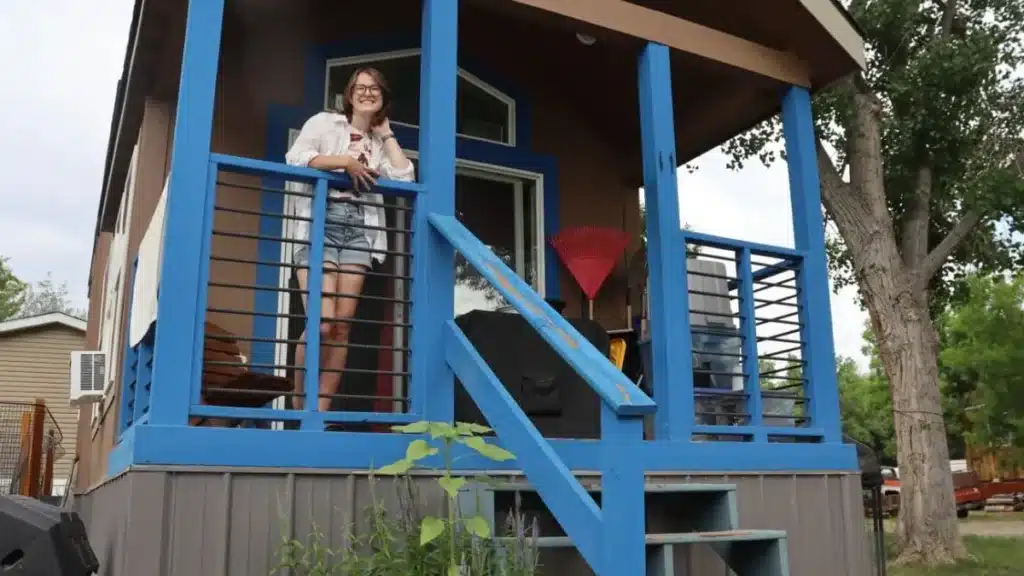
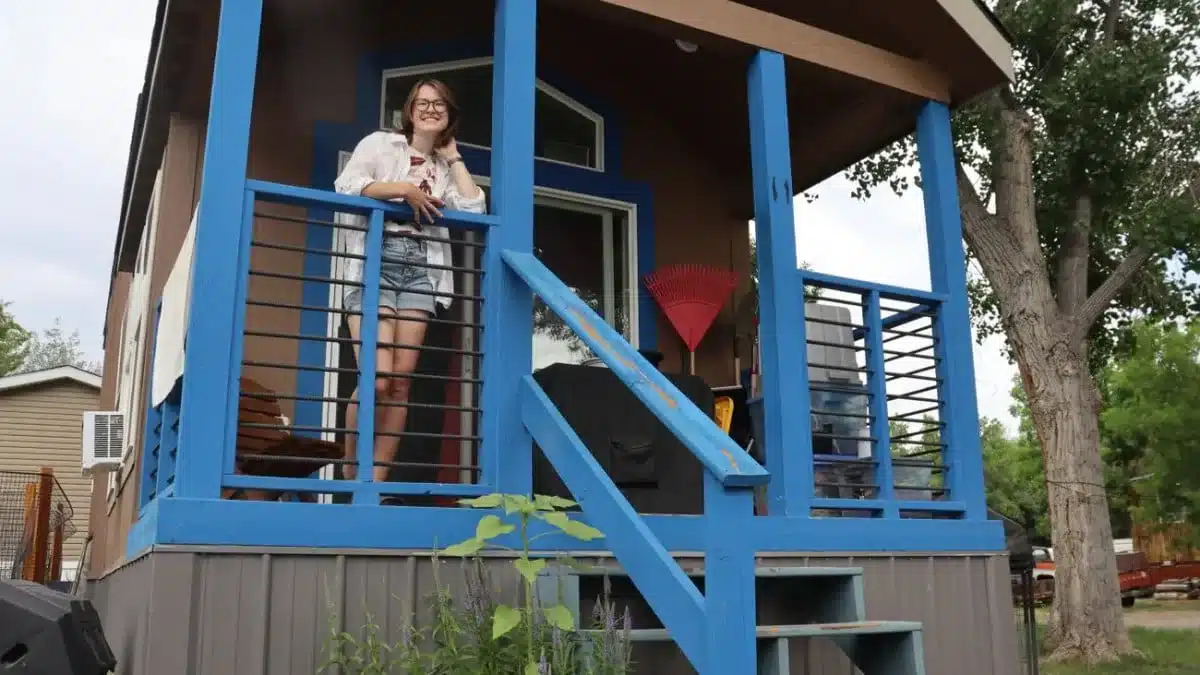

Amber McDaniel and her partner live in a 37 m² tiny house — and make every square foot count. Through vertical storage, a mezzanine bedroom, and a backyard greenhouse, she has turned radical downsizing into a fully functional, self-sufficient lifestyle.
Tiny house living is no longer a fringe movement. More and more people are choosing to shrink their footprint — financially and physically — by trading sprawling square footage for smarter, leaner spaces. Amber McDaniel is one of them, and her approach to organizing a 37-square-meter home shared with her partner offers a practical blueprint for anyone curious about the real mechanics of small-space living.
According to Business Insider, which covered her story, the key to making it work isn't minimalism for its own sake. It's intentional design, vertical thinking, and a willingness to rethink what a room actually needs to do.
Every room does double or triple duty
In a tiny house of 37 m², there is no room for single-purpose spaces. Amber's main living area functions simultaneously as a salon, dining room, home office, and workout space. That kind of overlap isn't a compromise — it's the entire logic of the layout. The furniture and the floor plan are chosen specifically to allow one zone to shift roles throughout the day.
At the back of the house, a secondary seating area holds a sofa, a television, and a desk, carving out a quieter corner for work or relaxation without requiring a separate room. And above it all, the mezzanine bedroom reclaims vertical space that would otherwise go unused, keeping the ground floor open and breathable.
A mezzanine bedroom is one of the most efficient upgrades in tiny house design — it adds a full sleeping area without consuming any ground-floor square footage.
Vertical space as the real square footage
The walls and beams in Amber's home aren't decorative — they're structural storage assets. Hooks fixed directly into the exposed beams allow clothes to hang overhead, freeing up floor space and eliminating the need for a traditional wardrobe. String lights installed around the same beams serve double duty: ambient lighting and a visual anchor that makes the space feel intentional rather than improvised. Dried canvases are propped on window cornices, using ledges that most people ignore entirely.
This vertical-first mindset is the single most transferable lesson from her setup. In a small space, the floor is the most contested territory. Moving storage upward — whether through beams, high shelves, or a mezzanine — is what allows the ground level to remain livable.
The kitchen and laundry room: compact but functional
Stacking and vertical organization in the kitchen
The kitchen in Amber's tiny house comes with limited counter space and minimal storage. Her response is strict: no processed food, no excess packaging, no wasted shelf real estate. She prepares exclusively homemade meals, which reduces the need for bulky appliances and keeps the counters clear. It's a lifestyle choice that directly shapes the physical organization of the room — and one that connects food habits to spatial efficiency in a way that's rarely discussed in standard home organization advice.
For anyone looking to optimize a small kitchen space, the principle applies broadly: fewer tools, used more deliberately, take up less room and perform better.
The laundry nook between rooms
Tucked into a vestibule between the kitchen and the living area, a compact laundry room holds a washing machine and a vertical storage system for cleaning products. The choice to use vertical stacking for household supplies rather than spreading them across shelves or under-sink cabinets is a direct application of the same logic used throughout the house. The bathroom follows suit, with stackable bins replacing conventional storage furniture.
total living space shared by Amber McDaniel and her partner — kitchen, bedroom, office, and laundry included
Food autonomy as a financial and spatial strategy
Beyond the walls of the house, Amber has installed a greenhouse on the exterior of the property. She grows her own fruits and vegetables there, reducing grocery costs and eliminating the need to stockpile produce inside the already-tight kitchen. The garden extension effectively expands the functional footprint of the home without adding a single square meter to the interior.
Looking ahead, she plans to raise quails to harvest their eggs — a compact, low-maintenance source of protein that fits the broader logic of the setup. Quails require far less space than chickens, produce eggs regularly, and align with a lifestyle described as both simple and ecological.
This kind of food self-sufficiency isn't just an environmental statement. It's a direct financial strategy. A tiny house can be acquired for as little as 10,000 euros in a comfortable configuration, according to available market data. When paired with reduced food costs through home cultivation, the overall cost of living drops significantly — which is precisely why tiny house living has gained traction as a legitimate alternative approach to personal finance and housing expenditure.
Entry-level tiny houses can start around 10,000 euros for a comfortable, functional setup — a fraction of the cost of traditional homeownership in most European or North American markets.
What Amber McDaniel's tiny house storage tips ultimately demonstrate is that small-space living is less about sacrifice and more about precision. Every object has a place, every surface serves a purpose, and every habit — from cooking from scratch to growing food outside — feeds back into the coherence of the whole system. The 37 m² she shares with her partner isn't a limitation. It's a constraint that forces clarity, and the result is a home that works harder than most spaces twice its size.