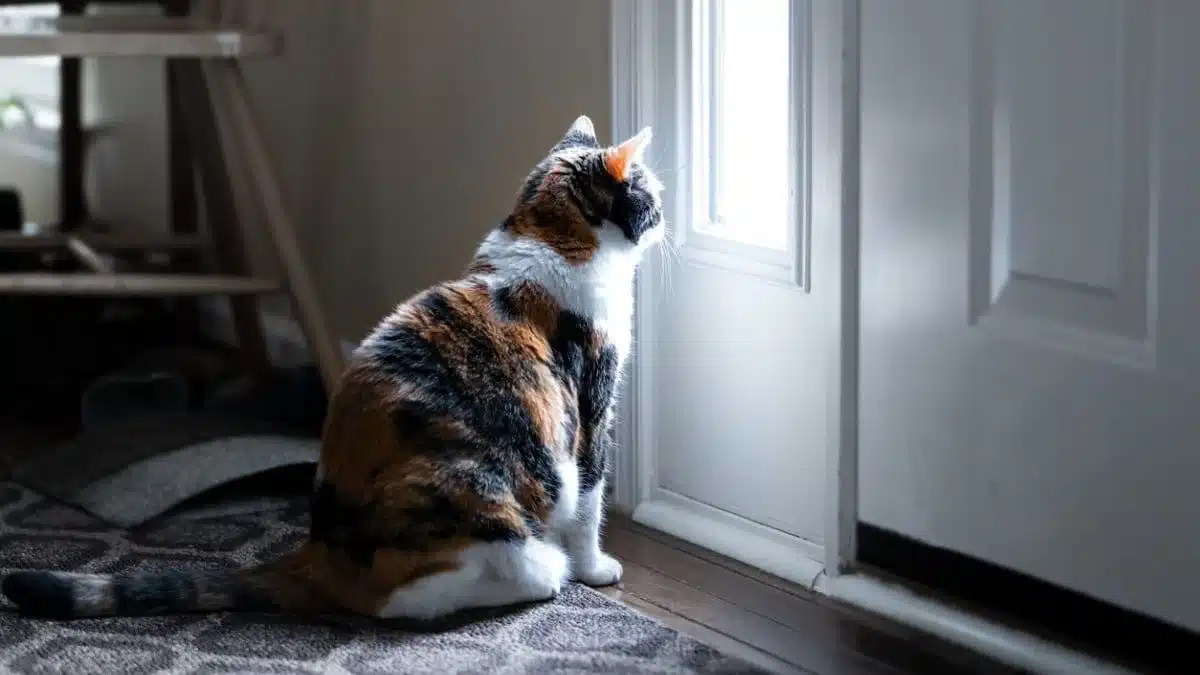

Sweden has made it illegal to leave a cat alone for an entire day. The country's animal welfare law now requires owners to interact with their cats at least twice daily, provide adapted living spaces, and submit to regular inspections at home. Non-compliance can result in fines or even confiscation of the animal.
Sweden has long been regarded as a country that takes animal welfare seriously, but its latest legislation on cat ownership raises the bar significantly. The law targets a deceptively simple problem: the isolation of domestic cats left alone for hours while their owners are at work, traveling, or simply absent.
And the consequences of ignoring this law are real. Owners who fail to meet the requirements face formal warnings, financial penalties, and in the most serious cases of animal mistreatment, the permanent removal of their cat.
Sweden's cat welfare law imposes daily interaction requirements
The core obligation of the Swedish legislation is straightforward: no cat can be left without human contact for a full day. That means owners must arrange at least 2 visits per day to ensure the animal is seen, checked, and engaged with socially. These aren't optional check-ins. They are legal requirements.
The reasoning behind this rule draws on what is now well-established in animal behavior research. Cats, often perceived as solitary and self-sufficient, still require regular human interaction to maintain psychological balance. Prolonged isolation leads to stress, behavioral problems, and deteriorating health. The Swedish legislature chose to encode this understanding directly into law.
Under Swedish law, cat owners who cannot be present themselves must delegate care to a third party — a trusted person from their social circle or a professional pet care provider.
What counts as a valid visit
The law doesn't simply require physical presence. Each visit must include genuine social interaction. The owner, or their designated caretaker, must also actively look for signs of illness or injury during each visit. This dual function — social contact and basic health monitoring — transforms the daily visit into a structured welfare check.
Who can substitute for the owner
When owners cannot be present, the law authorizes two categories of substitutes: professionals in pet care, and people from the owner's personal network. The delegation is not regulated in terms of credentials for informal caregivers, but the responsibility remains with the owner if something goes wrong.
Living conditions for cats are now strictly defined
Beyond the daily interaction requirement, the Swedish law establishes precise standards for the physical environment in which a cat must live. This goes well beyond having food and water available.
Owners must provide a space that is sufficiently large and adapted to the cat's behavioral needs. Concretely, this means the environment must allow the animal to climb, hide, and access elevated areas. Cats are natural climbers and territorial animals — a flat, featureless space fails to meet their instinctive requirements, regardless of its size.
The list of mandatory equipment includes:
- A scratching post
- Food and water bowls
- A litter box
- Toys for stimulation
This isn't a suggestion list. These items are part of the legal standard. An owner whose home lacks a scratching post is, technically, in violation of the law. Interestingly, the legislation also establishes air quality limits within the living space, though the specific numerical thresholds have not been publicly detailed in the sources reviewed.
Swedish cat owners are legally required to provide enrichment features — vertical space, hiding spots, and climbing structures — not just basic food and shelter.
Enforcement is active, with real penalties for non-compliance
One of the most striking aspects of the Swedish approach is that the law includes active enforcement mechanisms. Authorities conduct regular inspections in private homes to verify that the conditions described above are actually met. The frequency of these inspections is not fixed, but their existence alone marks a significant shift from purely declarative animal welfare legislation.
When a violation is detected, the process follows a graduated structure. A formal notice is issued first, giving the owner an opportunity to correct the situation. If the problem persists or is severe enough, a financial fine is imposed. The exact amount has not been made public in available sources, though it has been described as substantial.
And at the most serious end of the spectrum: confiscation. If authorities determine that a cat is being mistreated — not merely neglected by accident, but subjected to genuine animal cruelty — the animal can be permanently removed from the owner's custody.
minimum daily visits required by Swedish law to check on a cat’s well-being
A model other countries may follow
Sweden's legislation on domestic cat welfare stands out in Europe for its specificity and enforceability. Most countries have general animal cruelty statutes, but few translate behavioral science into binding daily obligations for cat owners. The Swedish model essentially reframes pet ownership as a structured responsibility rather than a private lifestyle choice.
This shift has broader implications. As scientists continue to explore animal cognition and emotional lives — much like the ongoing work around recreating extinct species that pushes the boundaries of our understanding of animal biology — the legal frameworks governing how humans care for animals are likely to evolve. Sweden appears to have moved first, at least when it comes to the daily welfare of the domestic cat. Whether other European nations follow depends largely on political will, but the template now exists.