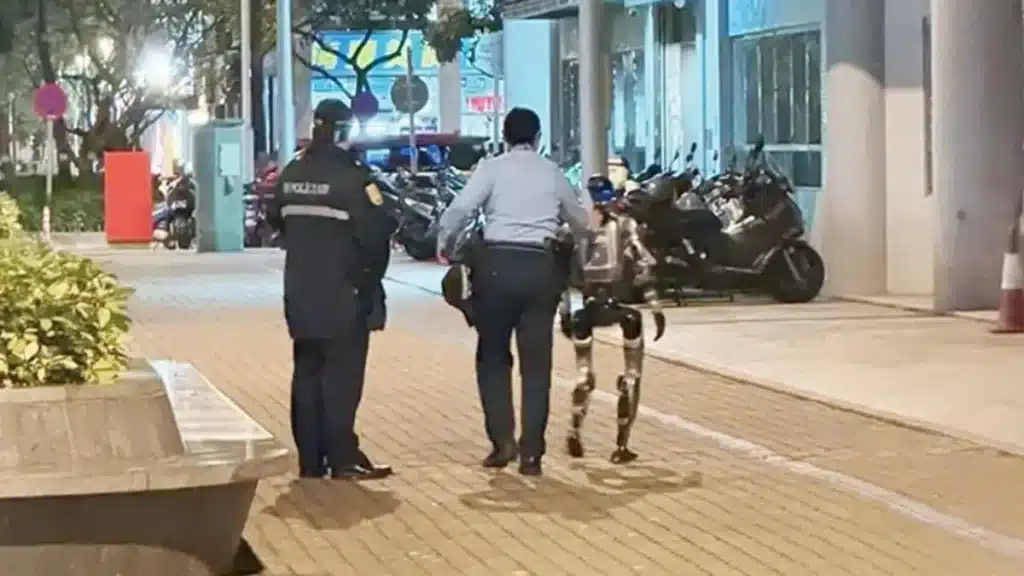
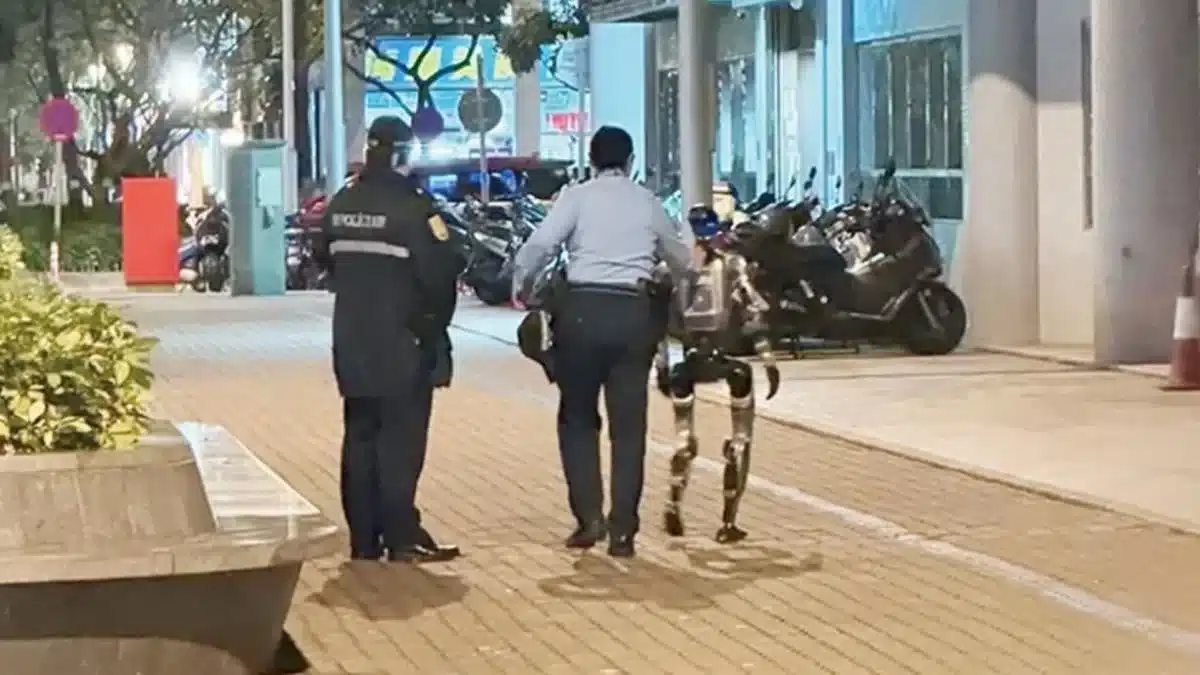

A humanoid robot manufactured by Chinese company Unitree was intercepted by police in Macao after frightening a 70-year-old woman on a public street. The machine had escaped its owner's supervision, prompting an intervention that ended with the robot being escorted home and the owner issuing a formal apology.
The scene reads like something out of a science fiction film, but it happened on a real street in the autonomous region of Macao, on the southern coast of mainland China. A humanoid robot, wandering unsupervised in a public space, approached an elderly woman who, rather than fleeing immediately, reportedly tried to speak to it, attempting to reason with the machine. The encounter left her shaken enough to require a hospital visit, though no physical injuries were recorded.
The incident gained international traction after Rohan Paul (@rohanpaul_ai) posted a video on Twitter/X on March 8, 2026, citing Paris Match as a translation source. The footage, originally circulated on Chinese social media by a passerby who filmed the scene, quickly sparked a wave of reactions ranging from disbelief to genuine concern about the unregulated presence of advanced robots in shared public spaces.
The Unitree G1 robot at the center of the incident
The robot in question is the G1, a humanoid model developed by Unitree, a Chinese robotics company that unveiled this particular machine in May 2024. Designed primarily for artificial intelligence research and development, the G1 is not a toy or a novelty gadget. Entry-level versions are priced at approximately $14,000, or roughly €12,000, placing it firmly in the category of serious technological hardware accessible to well-funded private individuals and research institutions alike.
starting price for the Unitree G1 humanoid robot
A machine built for labs, not sidewalks
The G1's intended environment is controlled: research facilities, testing grounds, development labs. Its presence on a public street, unsupervised, represents a significant departure from its designed use case. The robot had apparently slipped away from its owner's watch, a detail that raises immediate questions about the responsibilities attached to owning and operating such a device outside of institutional settings.
Concrètement, this is not a remote-controlled toy that drifts a few feet. A humanoid robot moving autonomously through a street, with its human-like form and unpredictable movement patterns, is inherently startling to anyone who encounters it unexpectedly. For a 70-year-old woman with no prior exposure to this type of technology, the encounter was, by all accounts, genuinely terrifying.
How police handled the situation
Officers intervened to contain the situation. The robot was physically escorted back to its owner's residence by a policeman, a detail that carries a certain surreal quality: law enforcement physically walking a robot home. The owner presented formal apologies for the disturbance. The elderly woman, despite the shock, was taken to hospital as a precaution and released without any documented physical injury.
The Unitree G1 was unveiled in May 2024 and is marketed primarily for AI research applications. Its humanoid design — upright posture, articulated limbs — is intended to replicate human movement patterns in controlled environments.
Humanoid robots in public spaces: a regulatory blind spot
This incident in Macao is not just an anecdote. It reflects a broader tension that is emerging as humanoid robots become more affordable and more capable. When a piece of advanced AI-driven hardware can be purchased for the price of a mid-range car and operated by a private individual, the question of where it can legally and safely operate becomes urgent.
Much like the debates that surrounded the early adoption of drones in urban environments, the appearance of humanoid robots on public streets is outpacing the regulatory frameworks designed to manage them. Drone legislation took years to catch up with the technology. And robots capable of autonomous movement in human environments present a far more complex set of variables.
The Macao incident draws a parallel, in some ways, to other unexpected technological encounters that have gone viral, much like scientists creating hybrid creatures in their attempt to revive extinct species — situations where the pace of scientific and technological development produces outcomes that the general public, and regulators, are simply not prepared for.
The viral spread and public reaction
The video's trajectory is telling. Filmed by a passerby on a Chinese street, shared on domestic social media platforms, then amplified internationally through a tweet on March 8, 2026, the clip accumulated attention precisely because it captured something genuinely unprecedented: a police officer dealing with a robot as if it were a misbehaving pedestrian.
Reactions online ranged across a wide spectrum. Some users expressed amusement at the absurdity of the image. Others raised pointed questions about liability: if a robot causes distress or, in a worse scenario, physical harm to a person in a public space, who is legally responsible? The owner? The manufacturer? The software developer? Current legal frameworks in most jurisdictions, including Macao, are not built to answer those questions cleanly.
As humanoid robots become increasingly accessible to private buyers, the absence of clear public-space regulations creates genuine risks for vulnerable individuals, particularly the elderly, who may have no frame of reference for interacting with autonomous machines.
But the incident also resonates beyond the immediate anecdote. The rapid dissemination of this story mirrors how other unexpected technological discoveries have captured public imagination — from massive mineral deposits found in unlikely locations to AI breakthroughs that seem to arrive faster than society can process them. The Macao robot story is, at its core, a story about a society encountering the future without having agreed on the rules first.
The Unitree G1 will not be the last humanoid robot to find itself in a public space it was never designed for. And the 70-year-old woman in Macao will almost certainly not be the last person to be frightened by one. What this incident makes clear is that the gap between what technology can do and what society has decided it should be allowed to do in shared spaces is widening, and incidents like this one are the visible, human cost of that gap.